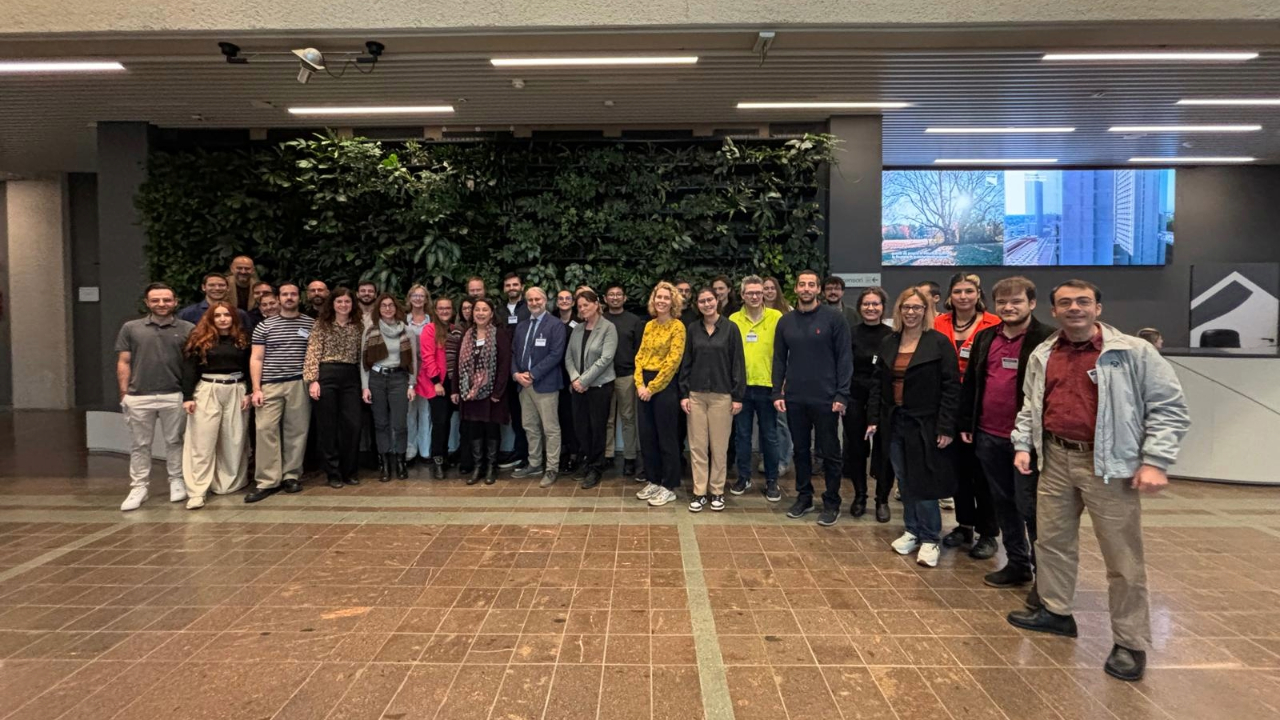

On 22–23 October 2025, Project DIOPTRA held its 6th Plenary Meeting in Bologna, Italy. Hosted by partner i2Grow, the consortium gathered at the premises of the Emilia-Romagna Region, which proudly sponsored the two-day event.
Advancing clinical and technical developments
Taking place in the project’s 22nd month, the meeting was an important opportunity to review progress since the previous plenary in Graz (April 2025) and to outline the next steps. The meeting opened with welcoming remarks from the Delegate of the President of the Emilia-Romagna Region, followed by an introduction from the Project Coordinator (ICCS), who addressed administrative, financial, and planning aspects as the project approaches its final year.
Clinical partner CHUL chaired a session providing a comprehensive clinical overview of the project. Updates included ongoing prospective recruitment at all clinical sites, active participant enrolment for the prospective study, and progress on a qualitative study assessing the newly launched Mobile App, designed to collect and deliver user feedback. Partners Teraglobus and Protavio also presented updates on prospective data collection, ethics approvals, and the clinical validation study and expandability survey.
Following, University of Ioannina (UOI) led discussions on technical implementation, presenting the latest developments in the DIOPTRA IT System, including software advancements and CRC profiling (addressed in depth by partner Protavio during the meeting).
Empowering screening through digital tools and communication actions
A central topic was the newly launched DIOPTRA App. Featuring several modules that support screening and promote healthy lifestyles, the app stands as a major milestone for the project—demonstrating the strong synergy between technology and healthcare. Following successful testing by clinical partners, the app is now available for enrolled participants via Google Play and the App Store, with further updates planned in the coming months.
The meeting also addressed communication and dissemination activities aimed at raising public awareness of colorectal cancer (CRC) screening, policy engagement measures, and the future sustainability of project outcomes.
Finally, discussions included updates on the Prevention and Early Detection (Screening) Cluster and preparations for the upcoming annual meeting, reaffirming the consortium’s commitment to advancing cancer research.